The Strength of a Calm Leader
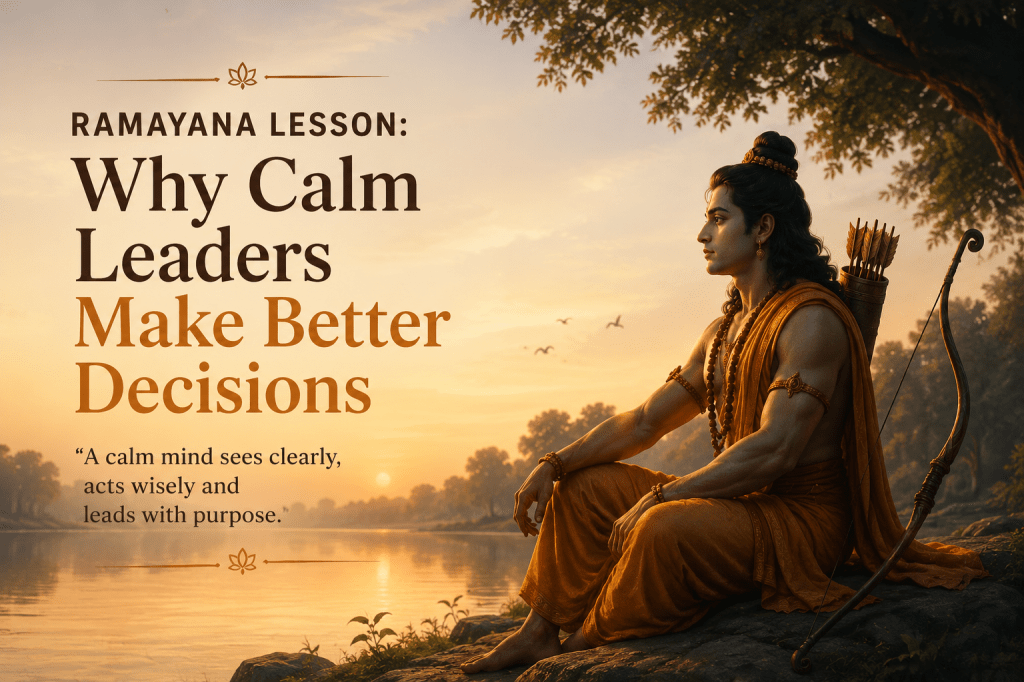
One of the most powerful qualities of Lord Rama in the Ramayana was not just courage, intelligence, or strength.
It was calmness.
Again and again, during the most difficult situations, Rama remained steady.
When he was asked to leave the kingdom and go to exile for 14 years, he did not react with anger.
When situations became unfair, he did not lose balance.
Even during war, pressure, separation, and emotional pain, he continued making decisions with patience and clarity.
And this is what made him a great leader.
Today, many people think leadership is about authority, speed, or control.
But real leadership is tested during pressure.
Anyone can stay positive when things are easy.
But the true mindset of a leader appears when:
- situations become uncertain,
- emotions become heavy,
- and decisions become difficult.
This is where calmness becomes power.
A restless mind creates emotional decisions.
A calm mind creates clear decisions.
In professional life, we often see the opposite happening.
Small problems create panic.
Pressure creates anger.
Ego controls conversations.
And emotional reactions slowly damage relationships, teams, and businesses.
Many leaders lose clarity not because they lack intelligence, but because they lose control over their state of mind.
The Ramayana teaches something very important:
Calmness is not weakness.
It is emotional strength.
A calm leader observes before reacting.
Thinks before speaking.
And chooses long-term wisdom over temporary emotion.
This is why calm leaders build stronger teams and better trust.
People feel safe around stable leadership.
Even during difficult times, a calm leader gives confidence to others.
Another powerful lesson from Rama’s life is that calmness does not mean inaction.
Rama still faced challenges.
He still fought battles.
He still made tough decisions.
But he did not allow emotions to control his actions.
That balance is what many people struggle with today.
Overthinking, stress, anger, impatience, and ego silently weaken decision-making.
And many times, the biggest damage in leadership happens not because of external problems — but because of internal instability.
A leader’s state of mind directly affects:
- communication,
- relationships,
- decision-making,
- and the future direction of the entire system.
This is true in family, business, and life.
The Ramayana reminds us that leadership is not only about managing people.
It is first about managing yourself.
Because when the mind becomes calm, decisions become clearer.
And when decisions become clearer, growth becomes more stable.
In the end, people may admire intelligence.
But they trust calmness.
And that is what makes a leader truly powerful.


Leave a Reply